量子芸術祭 特別展「オルタナティヴ・コンピュテーションズ ― 祝祭の計算文化」に寄せて
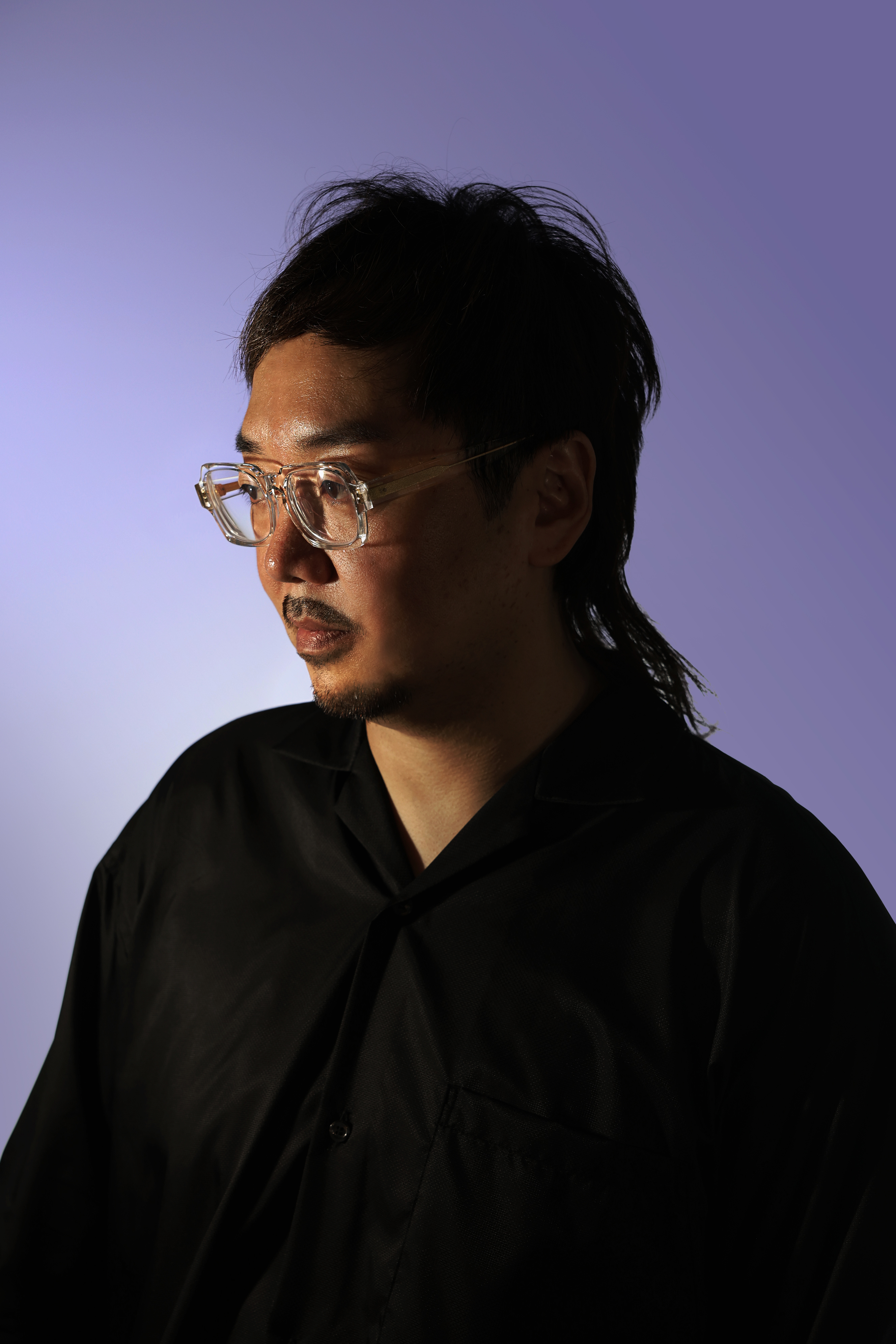
文 / 青木竜太
火薬は、銃にも花火にもなる。
私は「花火的な技術」を探求したいと考えてきた。技術が暴力化するのは、遊びと祝祭が失われたときだ。計算が効率や正確さだけを目的とする装置へと固定されるとき、揺らぎや逸脱は排除され、世界はひとつの見方へと収束してしまう。今日、テクノロジーが社会のあらゆる領域に浸透する中で、この収束はかつてない速度で進行している。
計算は、人間が発明した技術ではない。それは自然世界において常に起こっている現象であり、生命現象もまた計算なのだ。数学は、その現象を理解し、世界と関わるためのインタフェースであり、同時に、世界をどのように切り取り、どのように見ているかを反映した不可視の構造でもある。言い換えれば、言語と同じように、数学そのものがひとつの世界の見方なのだ。計算や数学をどのように用い、どのように扱ってきたかという人間行為の総体——本展ではこれを「計算文化」と呼ぶ。
本展では、この「計算文化」を三つの作品を通して問いかける。展覧会と同名の新作大型インスタレーション《オルタナティヴ・コンピュテーションズ》は、本展の中心をなす作品である。失われた計算文化としての和算と東アジアの宇宙観を参照しながら、彫刻の系譜を引き受け、祝祭的な場を立ち上げる。この作品を軸に、平面作品シリーズ《ファントム・リアリティーズ(幽玄的実在)》は、現代の数式を和算的に再解釈し、数学という不可視の構造が持つ「並行世界性」を可視化する。そして《ニュー・ルソー・マシーン》(2021)は、投票と集計という社会的計算を物質化する。同じ投票内容であっても、集約ルールが変われば結果は変わるという、社会的意思決定もまた揺らぎうる計算であることを可視化する。
これら三作品は、計算が単なる効率化の道具ではなく、世界の見方を規定し、関係を生成し、社会を形成する文化的営みであることを、それぞれ異なる角度から照らし出す。
《オルタナティヴ・コンピュテーションズ》
技術は普遍的なものではない。哲学者ユク・ホイが「コスモテクニクス」として論じたように、技術はそれぞれの文化と宇宙観に根ざした多様な形態をとりうる。かつて日本には、和算と呼ばれる独自の数学が存在していた。17世紀、関孝和は独自に行列式の概念を発見し、ベルヌーイ数に相当する数列を西洋に先駆けて導出するなど、西洋数学とは独立した文脈で極めて高度な代数学・幾何学を展開した。しかし和算の本質は、単なる数学的業績にとどまらない。それは解をひとつに収束させることより、事物との関係性を通して世界と向き合う思考を育む営みであった。
和算を介して場や関係が生成される遊戯的・祝祭的な行為は、俳句や茶の湯と並ぶ文化のひとつでもあった。ここでいう「祝祭性」とは、ロジェ・カイヨワが『遊びと人間』で論じた日常の効率性からの逸脱であり、バタイユが「蕩尽」と呼んだ過剰を許容する時空間の質を指す。計算問題やその解き方を寺社仏閣に奉納する「算額奉納」という習わしは、まさにこの祝祭性を体現している。算額は単なる数学的証明の記録ではなく、神仏への奉納物として美しく装飾され、時に競技的な応酬を生み、地域共同体の知的交流の場を形成した。和算が経済・芸術・宗教と結びついた「計算文化」であったことを物語っている。
数学もまた言語と同様に、それぞれの文化圏で固有の発展を遂げてきた。サピア=ウォーフ仮説が言語について述べるように、数学もまた思考に影響を与え、人の世界認識をかたちづくる。しかし明治期の近代化により、和算とこうした計算文化は政府によって教育システムのなかから排除され、西洋数学が全国に導入された。英語が国際共通語としての有用性を持つとしても、すべての言語がそれに置き換わることが正当化されないように、数学においても多様性の喪失は人類にとって計り知れない損害をもたらす。
本作は、失われた計算文化を懐古的に再現するものではない。和算が持っていた祝祭性——生産性や有用性の論理を超えた過剰の肯定、そして場と関係を生成する遊戯的な営み——を、現代において空間として立ち上げる試みである。
彫刻は、物質の塊から、光と空間の関係性へ、そしてシステムと情報へとその形態を変容させてきた。一方でモノ派は、西洋的なシステム論とは異なる道筋で、物質と観測者の「出会い」そのものを彫刻として提示した。彫刻とは何か、その素材と成立条件はどこまで拡張しうるのか——本作は、この問いを引き受けながら、東アジアの宇宙観を参照し、揺らぎと関係性によって一時的に立ち上がる「場」としての彫刻を試みる。社会彫刻が人間の思考と意志へ拡張し、バイオアートが生命という物質へと向かったとすれば、本作はむしろ計算という不可視の構造——世界の見方そのもの——を彫刻の素材として扱い、そこに祝祭性と遊戯性を回復させようとする。
天空には、二十八宿を象徴する28本の算木が円環をなして吊り下げられ、天体の運行のように波動する。北方玄武七宿の第一宿である斗宿——暦の起点にして宇宙の秩序を司る星宿——の方角からは光が差し込み、空間に時間と方位を与える。その下には四畳半の畳が置かれる。茶の湯において、四畳半とは春夏秋冬を四畳に、土用を半畳に見立てた小さな宇宙であり、人が座し、精神を整え、世界と向き合う場である。周囲を囲む葦は、日本神話において地上世界を意味する「葦原中国(あしはらのなかつくに)」——天と黄泉の間にあるこの世界——を想起させる。空間には雨音が降り注ぐ。それは生命を育む水であり、揺らぎそのものである。観客の存在や振る舞いは場の状態に組み込まれ、そのたびごとに異なる宇宙が立ち上がる。同じ宇宙は二度と現れない。
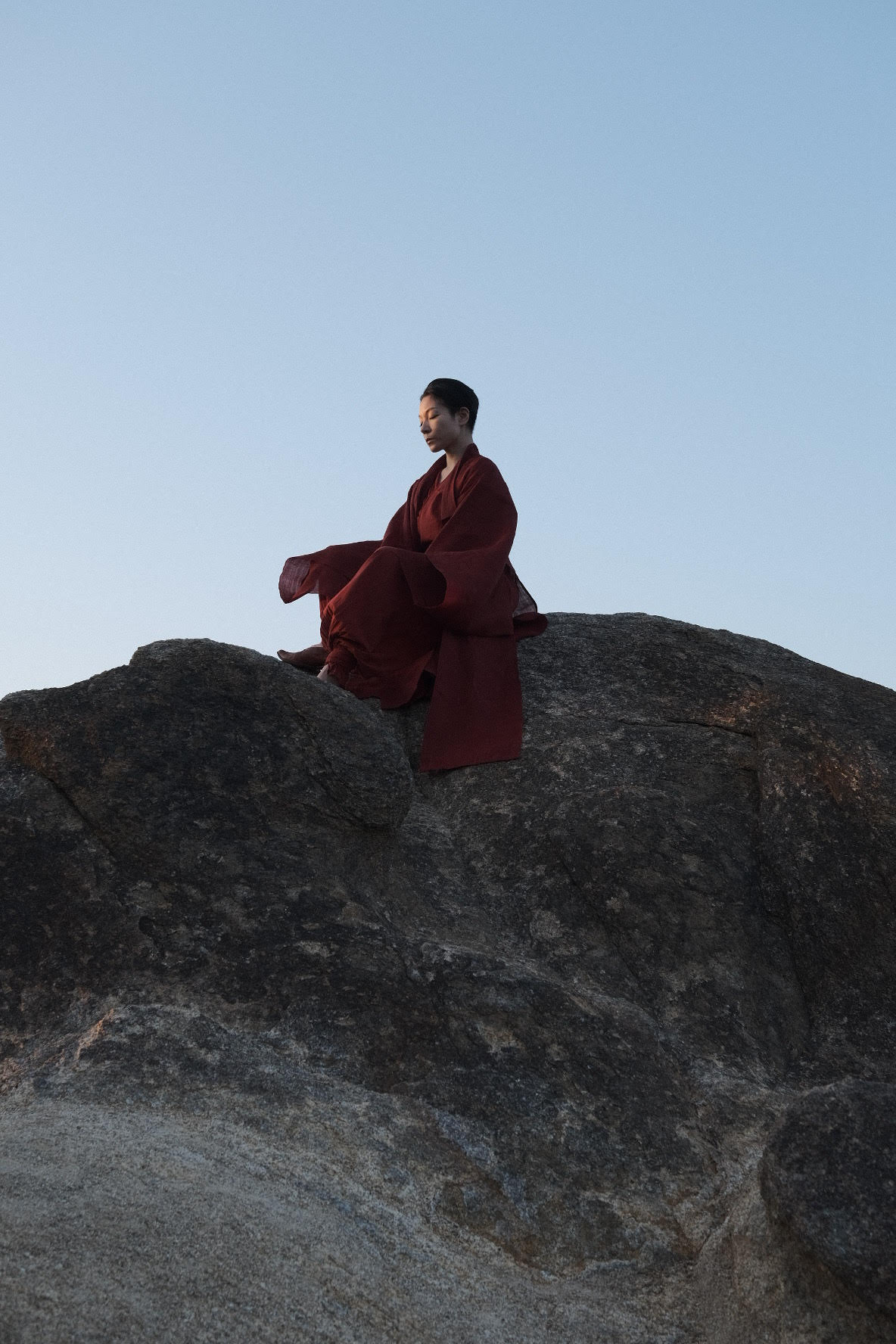
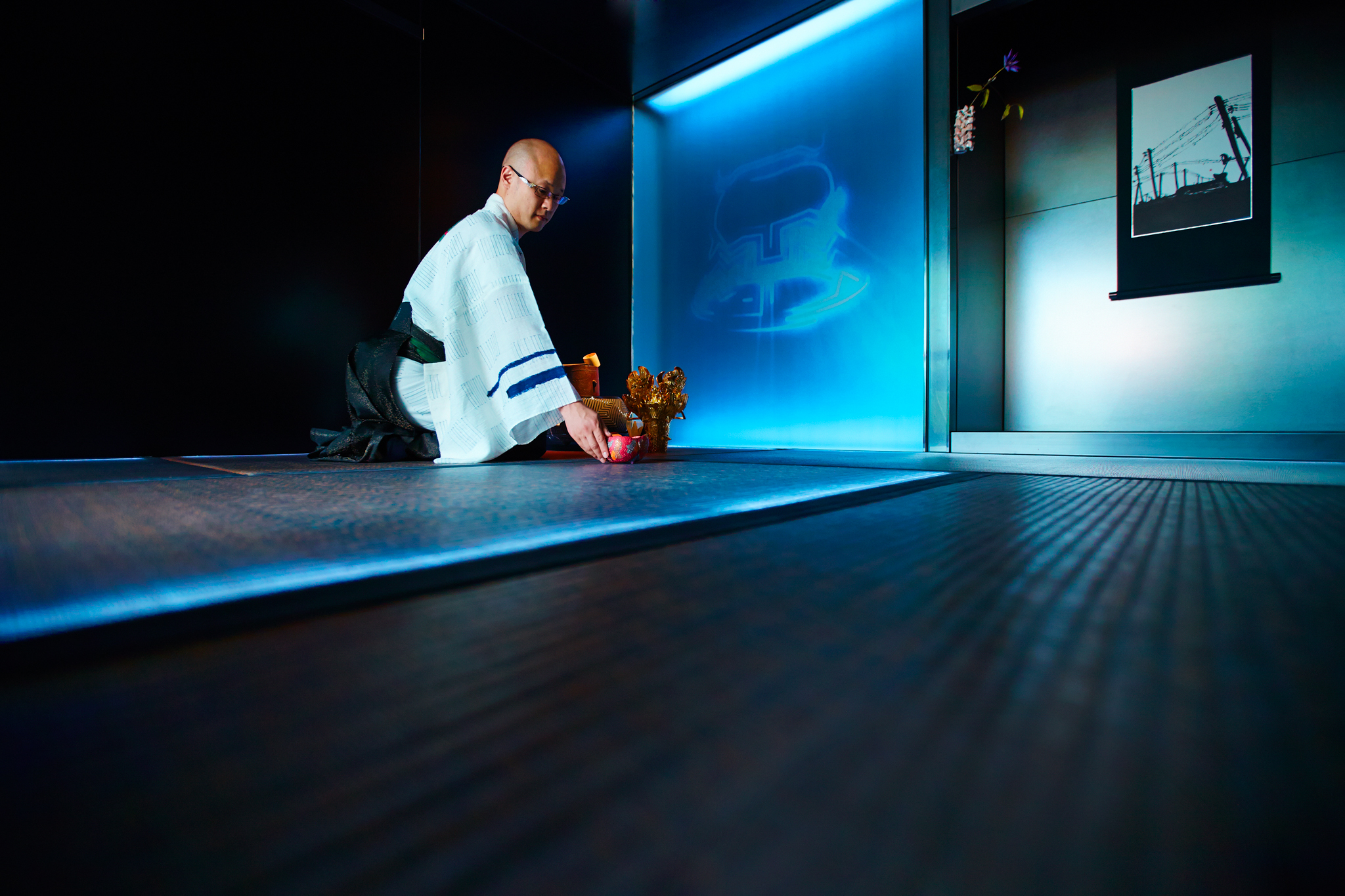
この作品において、舞踊家・苳英里香と茶人・松村宗亮による身体的プロトコルは、付随的なイベントではなく、作品の本質的構成要素である。インスタレーションが潜在的に孕む無数の可能性から、彼らの身体所作が特定の宇宙を「観測」し、一時的に現実化させる。茶の湯における点前の所作、舞踊における身体の軌跡は、空間に秩序を与え、時間に区切りを刻み、場を起動し、そして停止させる。これは、和算における算額奉納が、単なる数学的行為ではなく、奉納という身体的・儀礼的行為を通じて初めて「計算文化」として成立したことと呼応している。
別様の計算、別様の世界
本展が提示するのは、正解や最適解ではない。それは、計算や数学を介して世界が別の仕方で立ち上がりうること、そして私たちが当然のものとして受け入れてきた世界の見方の外側に、確かに別の計算文化が存在しうるという可能性である。
三つの作品は、その形態も素材も異なるが、いずれも収束への抵抗——揺らぎを受け入れ、多様性を保持し、祝祭性を回復すること——を試みている。
収束の手前にある〈あいだ〉にとどまること。計算が本来持ちうる遊戯性や祝祭性を、不可視の構造として体験可能なかたちで提示すること。それが、本展「オルタナティヴ・コンピュテーションズ ― 祝祭の計算文化」の試みである。
Statement: Quantum Art Festival Special Exhibition "Alternative Computations: Worlds Otherwise Calculated"
Text: Ryuta Aoki
Gunpowder can become either a weapon or fireworks.
I have long sought to explore "firework-like technology." Technology turns violent when play and festivity are lost. When calculation becomes fixed as an apparatus solely for efficiency and accuracy, fluctuation and deviation are eliminated, and the world converges toward a singular worldview. Today, as technology permeates every domain of society, this convergence accelerates at an unprecedented pace.
Calculation is not a technology invented by humans. It is a phenomenon that constantly occurs in the natural world; life itself is calculation. Mathematics serves as an interface for understanding this phenomenon and engaging with the world, while simultaneously functioning as an invisible structure that reflects how we frame and perceive reality. In other words, like language, mathematics itself constitutes a way of seeing the world. The totality of human practices surrounding the use and treatment of calculation and mathematics—this exhibition terms "cultures of calculation."
This exhibition interrogates "cultures of calculation" through three works. The large-scale installation Alternative Computations, sharing its title with the exhibition, stands at its center. Referencing wasan (traditional Japanese mathematics) as a lost culture of calculation and East Asian cosmology, it assumes the lineage of sculpture while inaugurating a festive space. Alongside this central work, the series Phantom Realities reinterprets contemporary mathematical formulas through the lens of wasan, visualizing the "parallel worldness" inherent in mathematics as an invisible structure. New Rousseau Machine (2021) materializes social calculation—voting and aggregation. It reveals how identical votes can yield different outcomes depending on aggregation rules, demonstrating that social decision-making is itself a form of contingent calculation.
These three works illuminate from different angles how calculation is not merely a tool for optimization, but a cultural practice that shapes worldviews, generates relations, and constitutes society.
Alternative Computations
Technology is not universal. As philosopher Yuk Hui argues through the concept of "cosmotechnics," technology can take diverse forms rooted in different cultures and cosmologies. Japan once possessed its own distinctive mathematics called wasan. In the 17th century, Takakazu Seki independently discovered the concept of determinants and derived sequences equivalent to Bernoulli numbers before the West, developing highly sophisticated algebra and geometry in a context entirely independent of Western mathematics. Yet the essence of wasan lies beyond mere mathematical achievement. It was a practice that cultivated thinking through relationships with things, rather than converging toward a single solution.
The playful and festive acts through which wasan generated fields and relations constituted a cultural practice alongside haiku and chanoyu (the Japanese tea ceremony). The "festivity" I speak of here refers to the deviation from everyday efficiency that Roger Caillois discussed in Man, Play and Games, and the quality of time-space that permits the excess Georges Bataille called "dépense" (expenditure). The custom of sangaku—dedicating mathematical problems and their solutions to shrines and temples—embodied precisely this festivity. Sangaku were not merely records of mathematical proofs but beautifully decorated offerings to deities, sometimes generating competitive exchanges and forming spaces for intellectual exchange within local communities. They reveal a "culture of calculation" in which wasan was intertwined with economy, art, and religion.
Mathematics, like language, has developed distinctively within each cultural sphere. As the Sapir-Whorf hypothesis suggests regarding language, mathematics too influences thought and shapes human perception of the world. However, during Japan's Meiji-era modernization (late 19th century), wasan and this culture of calculation were eliminated from the educational system by the government, replaced by Western mathematics introduced nationwide. Just as the utility of English as an international lingua franca does not justify the replacement of all other languages, the loss of diversity in mathematics constitutes immeasurable damage to humanity.
This work does not nostalgically recreate a lost culture of calculation. It attempts to spatially manifest in the present the festivity that wasan possessed—the affirmation of excess beyond the logic of productivity and utility, and the playful practice of generating fields and relations.
Sculpture has transformed from material mass to relationships of light and space, and then to systems and information. Meanwhile, Mono-ha presented the "encounter" between material and observer as sculpture itself, following a path distinct from Western systems theory. What is sculpture, and how far can its materials and conditions of existence be extended? This work takes up these questions while referencing East Asian cosmology, attempting sculpture as a "field" that temporarily emerges through fluctuation and relationality. If Social Sculpture extended into human thought and will, and if Bio Art moved toward life as material, this work treats calculation—an invisible structure, a way of seeing the world itself—as sculptural material, seeking to restore festivity and playfulness to it.
In traditional East Asian astronomy, the celestial sphere is divided into the Twenty-Eight Mansions (nijūhasshuku)—lunar stations that map the heavens into four quadrants, each associated with a mythological creature and governing cosmic order and time. In the installation's celestial space, twenty-eight sangi (calculating rods used in wasan) hang in a circle, symbolizing these mansions and undulating like celestial movements. Light enters from the direction of Dou (the Dipper), the first mansion of the Northern Genbu (Black Tortoise) quadrant—the stellar lodge marking the origin of the calendar and cosmic order—endowing the space with time and orientation.
Below lies a yojōhan (four-and-a-half tatami mat) floor. In chanoyu, the four-and-a-half mat room represents a microcosm: four mats for the four seasons, half a mat for doyō (the transitional periods between seasons). It is a place where one sits, composes the spirit, and faces the world. The surrounding reeds evoke Ashihara no Nakatsukuni (the Central Land of Reed Plains)—in Japanese mythology, the earthly realm between the heavens and the underworld. The sound of rain pervades the space—water that nurtures life, fluctuation itself. The presence and behavior of viewers become incorporated into the state of the field, and each time a different universe emerges. The same universe never appears twice.
In this work, the bodily protocols performed by dancer Erika Fuki and tea master Souryo Matsumura are not ancillary events but essential components of the work. From the countless possibilities latent within the installation, their bodily gestures "observe" and temporarily actualize a specific universe. The gestures of temae (the ritualized procedures of preparing tea) in chanoyu, the trajectories of bodies in dance, impose order upon space, mark intervals in time, activate and then suspend the field. This resonates with how sangaku dedication in wasan became a "culture of calculation" only through the bodily and ritual act of offering, not through mathematical action alone.
Alternative Calculations, Alternative Worlds
What this exhibition presents is neither correct answers nor optimal solutions. It presents the possibility that through calculation and mathematics, the world might emerge otherwise—that beyond the worldview we have accepted as given, alternative cultures of calculation can indeed exist.
The three works differ in form and material, yet each attempts resistance to convergence—embracing fluctuation, maintaining diversity, and restoring festivity.
To dwell in the "in-between" before convergence. To present the playfulness and festivity inherent in calculation as an invisible yet experienceable structure. This is the endeavor of "Alternative Computations: Worlds Otherwise Calculated."